


Prologue
Brand born in crisis
February 24, 2022, forever changed the world and lives of millions of people.
Now life is divided into before and after.
Before the global economy had time to recover from the coronavirus, new economic and geopolitical pressures arrived. In addition to the loss of livelihoods, suffering, and humanitarian challenges caused by ongoing instability in parts of the region, Southern Africa’s economy continues to feel the effects of slowing growth and accelerating inflation.
In such difficult times, we all have to live and work. In the first months of the crisis, we were uncertain and did not understand what to do. But over time comes awareness and understanding that you need to continue to work even harder and achieve results in the shortest possible time. Only an economically strong nation can resist inflation.
Since many former sales markets were disrupted due to logistical challenges and port congestion in South Africa and limited trade corridors affecting Zimbabwe, a brand was developed targeting the African market. Carefully selected label colors, fonts, ergonomic bottle shapes, and the most important ingredient—quality sunflower oil—give a distinct advantage over competitors.
We thank everyone for their support and cooperation.
Annotation
The country of liquid gold
Nature is our wealth. From early childhood, we were told that nature should be protected. Treated with respect and care. This is an amazing and beautiful world that surrounds a person.
Travelling across Zimbabwe and South Africa, you can see sunflowers growing in the fields near the road. These endless expanses joyfully decorate everything around with a bright yellow color, giving the surroundings warmth and rich color. But as soon as the sunflower bows its head to the ground, it is time to benefit humanity:
– Harvest, the most valuable – sunflower seeds.
Zimbabwe and South Africa are among the significant producers of sunflower oil in the region. Despite external obstacles, we continue to develop the export and production of sunflower oil in Southern Africa, as well as develop new markets and acquire new partners.
Brand Identity
Perfection is achieved not when there is nothing to add, but where there is nothing to take away
- Made of the highest quality sunflower seeds, with modern cleaner production technologies that retain the benefits of seeds in the oil.
- Sunflower oil goes through a number of stages of purification – hydration, deodorization, freezing, bleaching. As a result, the oil is purified from harmful substances, free fatty acids, natural waxes. This oil is ideal for heat treatment.
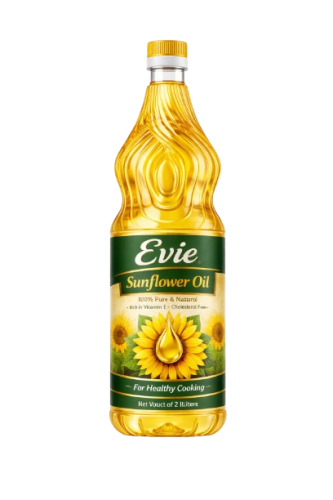
- Attractive packaging and unique shaped designed for good identification, stand out from the competition. Ergonomics is designed to make it comfortable for the end users to use the product.
- Quality is controlled at all stages of production from the reception of sunflower seeds to the exist of finished product from the plant.
- Thanks to modern production technologies, vitamins A, D and E lost during refining and deodorization of sunflower seeds can be restored in their natural volume. Such a product retains all its best qualities; it has no smell, sediment, taste, it is stored for the long time, it does not foam during heat treatment. And most importantly – supplements diet with a vitamin complex.
- The cost of our products corresponds to its high quality. You get not only a quality product, but also an impeccable service and reliable partners. On our website, you can place an order by filling out an online form.
History insights
Ascension of Helianthus
Sunflower belongs to the Asteraceae family. The scientific name of this plant—Helianthus—is translated from Latin as “sunny flower.” The “sunny flower” was brought to Europe, like corn, by the sailors of Columbus. The Spaniards who saw the plants in the steppe region of Peru were fascinated by the beauty of the golden inflorescence. However, for a long time, the sunflower that bloomed in Spain, France, England, Germany, South Africa, and Holland had no use other than decorative—it was just an exotic flower.
A similar journey happened in Southern Africa. Sunflowers were introduced to the region by Portuguese and Dutch traders in the 18th and 19th centuries, but for many years they remained a garden curiosity. It was only in the early 20th century that farmers in Zimbabwe (then Rhodesia) and South Africa began recognising the value of sunflowers as an oilseed crop. By the 1950s and 1960s, sunflower cultivation expanded significantly, especially in the warmer, drier regions such as Mashonaland (Zimbabwe) and Limpopo, North West, and Free State provinces (South Africa).
In the modern world, breeders have developed many sunflower varieties that are distinguished by high yields and oil content and are well adapted to Southern African climatic conditions—including drought-tolerant and early-maturing hybrids.
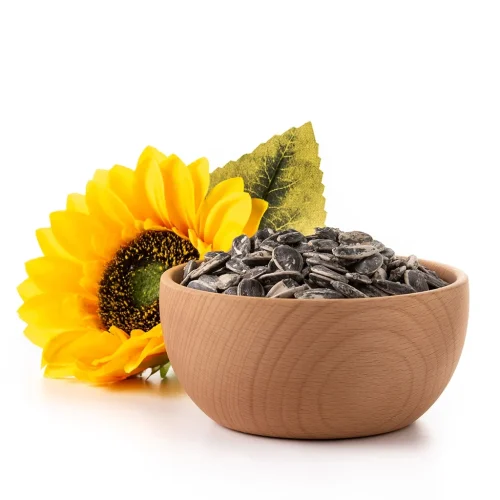
The chemical composition of sunflower seeds impresses with its diversity and richness. Sunflower seeds contain many vitamins—A, B, C, D, and E. In raw seeds, vitamin D is found in amounts even greater than in cod liver. And 50g of seeds can fill the body’s daily need for vitamin E.
Production Process
The runner after quality can catch up with quantity, but the runner after quantity will not catch up with quality.
The organolertic and physico-chemical parameters of sunflower oil are achieved through numerous thorough purification and filtration. Literally, refining means cleansing. All of the above methods of cleaning (refining) the oil help to increase the shelf life of the oil, make it impersonal and betray a pleasantly light golden color.
History in number
Zimbabwe and South Africa are significant producers of sunflower seeds and their processing in the Southern African region.
- The area of million hectares – 4.57
- Productivity centner / hectare – 15
- Export sunflower seeds – 444 560 tons
- Sunflower oil production – 914300 tons
- Export of sunflower oil – 590 700 tons
- The area of million hectares – 5.09
- Productivity centner / hectare – 21.7
- Export sunflower seeds – 69 800 tons
- Sunflower oil production – 4 650 000 tons
- Export of sunflower oil – 4 186 200 tons
- The area of million hectares – 6.03
- Productivity centner / hectare – 20.2
- Export sunflower seeds – 37 700 tons
- Sunflower oil production – 5 756 000 tons
- Export of sunflower oil – 5 340 000 tons
- The area of million hectares – 6.11
- Productivity centner / hectare – 23
- Export sunflower seeds – 105 000 tons
- Sunflower oil production – 6 482 000 tons
- Export of sunflower oil – 6 062 000 tons
- The area of million hectares – 5.9
- Productivity centner / hectare – 25.6
- Export sunflower seeds – 50 300 tons
- Sunflower oil production – 6 900 000 tons
- Export of sunflower oil – 6 684 000 tons
- The area of million hectares – 6.48
- Productivity centner / hectare – 20.2
- Export sunflower seeds – 190 800 tons
- Sunflower oil production – 5 800 000 tons
- Export of sunflower oil – 5 277 000 tons
- The area of million hectares – 6.66
- Productivity centner / hectare – 24.6
- Export sunflower seeds – 1 700 000 tons
- Sunflower oil production – 5 200 000 tons
- Export of sunflower oil – 4 300 000 tons
The Zimbabwe market for processing the main oilseed crops has grown 9.2 times throughout the country’s independence.
Geography
Every day we expand the representation geography
In the shortest possible time, we had to reorient ourselves and open up new markets. In part, there was a complete reboot of the business model. We have worked on the bugs, An active development strategy has been written. Acquired new reliable partners. And from that moment our expansion of markets began.
We are working in the basis of FCA; FOB; CIF; CFR; DAP.
Our Credo